
by Site Admin
Share
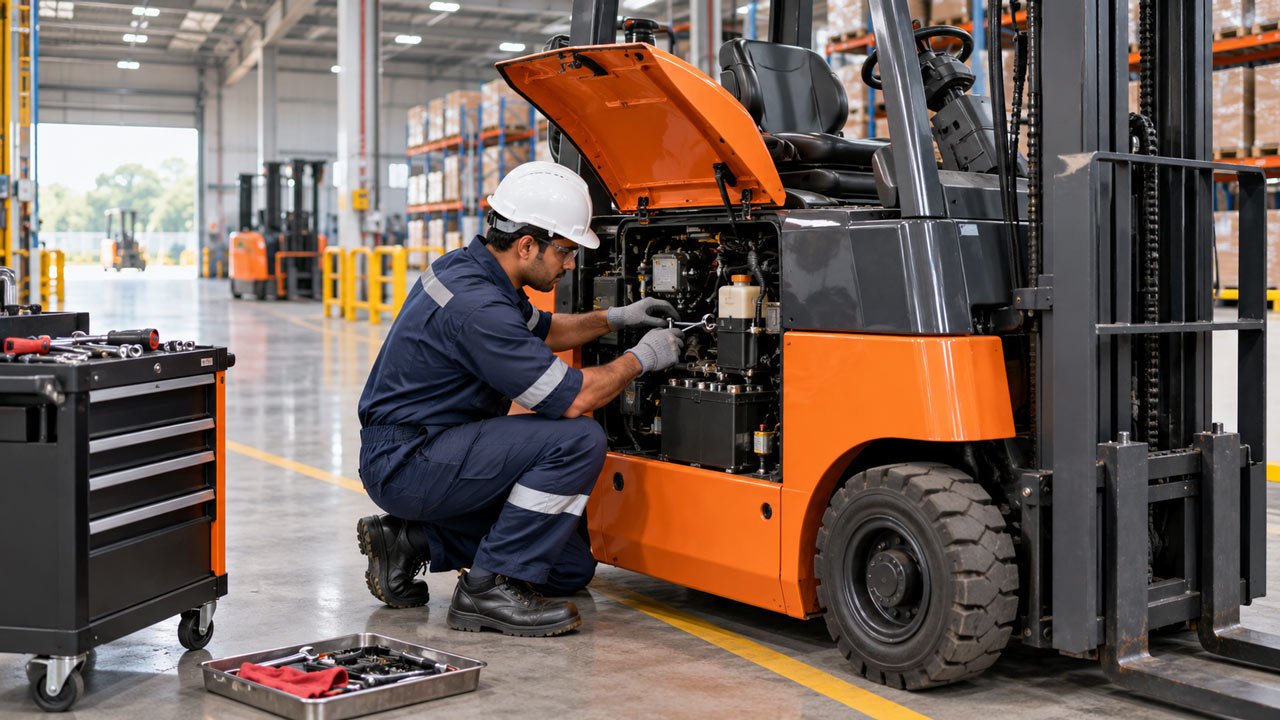
Warehouse equipment is often expected to operate continuously across multiple shifts.
A breakdown in a forklift, pallet truck, stacker, conveyor or lift can disrupt far more than one machine. It can affect loading schedules, production flow and dispatch operations.
That is why maintenance should not begin only after equipment fails.
NGT’s after-sales portfolio includes Annual Maintenance Contracts, on-site repair and emergency support, genuine spare parts management, equipment health audits, safety inspections, refurbishment and modernization.
Reactive Maintenance vs Preventive Maintenance
Reactive maintenance means repairing equipment after a breakdown.
Preventive maintenance involves inspecting and servicing the machine before failures occur.
The second approach offers several operational advantages.
Reduced Unexpected Downtime
Scheduled checks can identify wear, loose components or performance issues before they become serious failures.
Better Equipment Reliability
Routine servicing can help ensure that equipment performs consistently throughout its operating cycle.
Improved Safety
Material handling machines carry heavy loads and often operate near people.
Brakes, hydraulics, forks, chains, wheels, controls and safety systems should therefore be inspected regularly.
Easier Maintenance Planning
Planned maintenance can be scheduled around production requirements rather than forcing operations to stop unexpectedly.
What Should an AMC Cover?
NGT’s AMC plans unlock with preventive maintenance, emergency support and access to genuine spare parts.
This is a comprehensive checklist a technicians follow while completing an AMC visit:
- scheduled inspections;
- lubrication and adjustment;
- electrical checks;
- hydraulic checks;
- wear-part inspection;
- safety checks;
- breakdown support;
- maintenance records;
- recommended spare parts.
Spare Parts Matter Too
Equipment reliability does not depend on service alone.
Availability of the correct spare parts is equally important.
Using appropriate replacement components can support equipment performance and reduce the risk of repeated failures.
Equipment Health Audits
For older fleets, an equipment health audit can help identify:
- components nearing end of life;
- recurring fault patterns;
- safety concerns;
- opportunities for refurbishment;
- machines that may need replacement.
Conclusion
Preventive maintenance should be treated as part of warehouse operations, not as an emergency expense.
A structured AMC and service plan can help businesses manage uptime, maintenance costs and equipment reliability more effectively.
Want to review the condition of your equipment fleet?
Contact NGT to discuss AMC, inspection or service support.