
Make Better Use of Every Cubic Metre of Your Warehouse
At Newgentech Solutions, we provide industrial racking solutions configured around the load, storage requirement, warehouse layout and material flow.
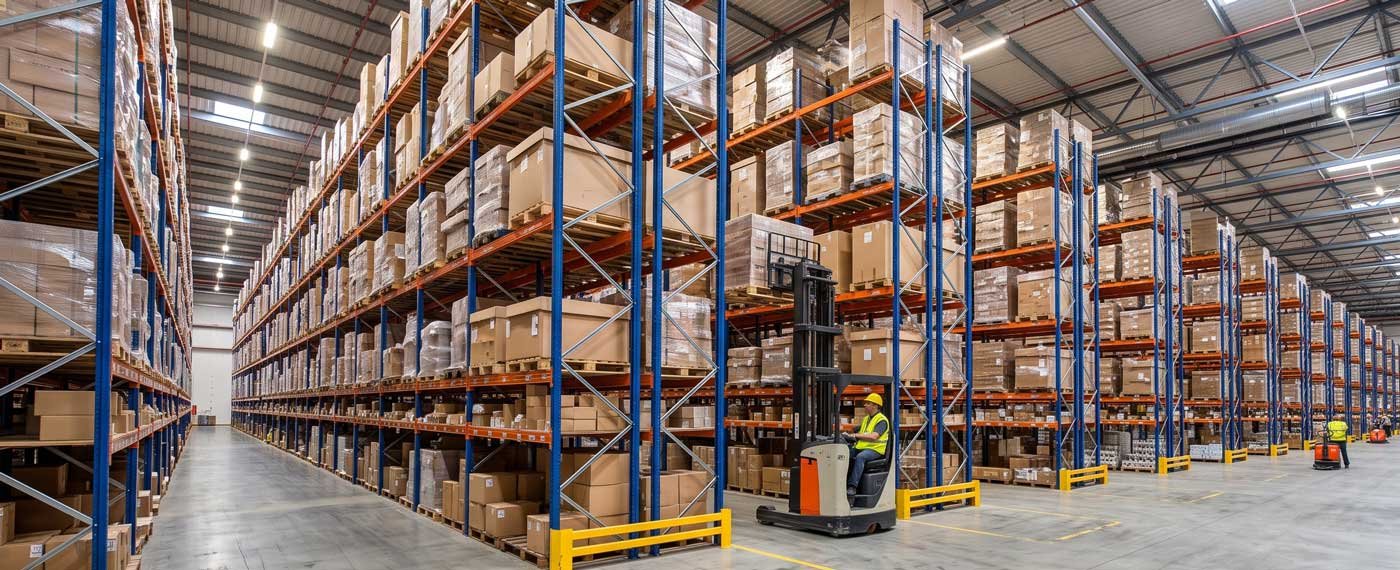
START WITH THE OPERATION
A Rack Is Not Just Storage. It Is Part of the Material Flow.
The same warehouse can require very different storage approaches depending on what is being stored and how inventory needs to move.
A racking system should be evaluated around factors such as:
- load type and dimensions
- pallet or storage medium
- available floor area and clear height
- required storage density
- inventory accessibility
- stock movement pattern
- aisle and operating space
- material-handling equipment
- replenishment and retrieval requirements
NGT approaches racking as part of the broader warehouse operation rather than treating the rack as an isolated structure.
EXPLORE THE RANGE
Six Storage Approaches for Different Warehouse Requirements.
The right racking approach depends on the inventory, load, layout, accessibility requirement and way materials move through the facility.
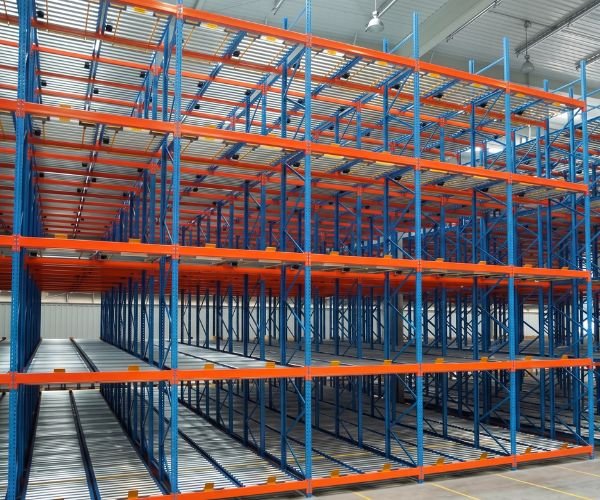
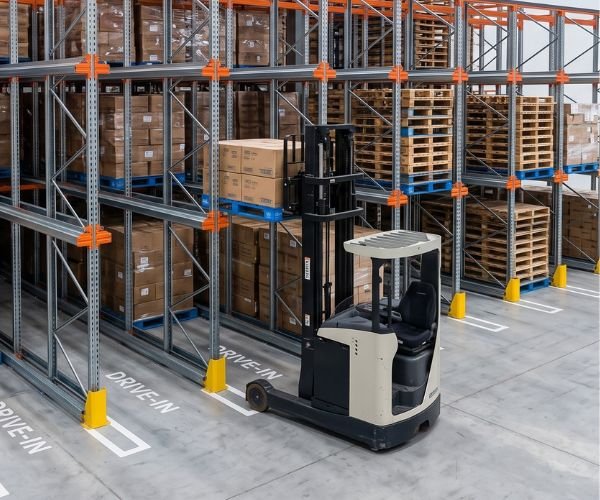
02 — HIGHER PALLET DENSITY
Drive-In Racking
A high-density pallet-storage approach that uses deeper storage lanes to reduce the amount of aisle space required between storage positions.
Relevant where storage density is an important consideration and the inventory pattern is suitable for lane-based storage.
APPLICATION GUIDE
Start With the Storage Priority.
Direct Pallet Access
If individual pallet positions need to remain readily accessible.
Explore:
Selective Pallet Racking
Higher Pallet Density
If reducing aisle requirements and increasing lane-based storage density is important.
Explore:
Drive-In Racking
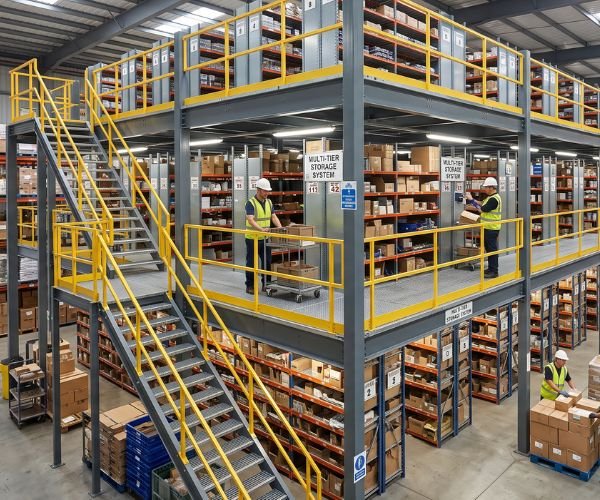
Use More Vertical Space
If the operation can benefit from multiple accessible storage levels.
Explore:
Multi-Tier Racking
Cartons, Bins & Components
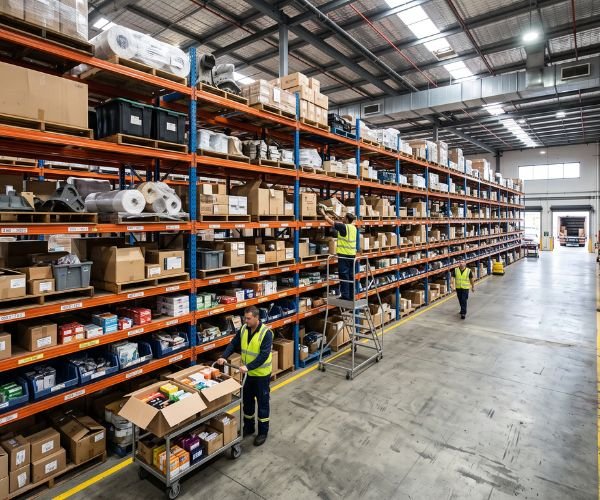
If materials are better suited to shelves than conventional pallet positions.
Explore:
Long Span Racking
Long or Irregular Loads
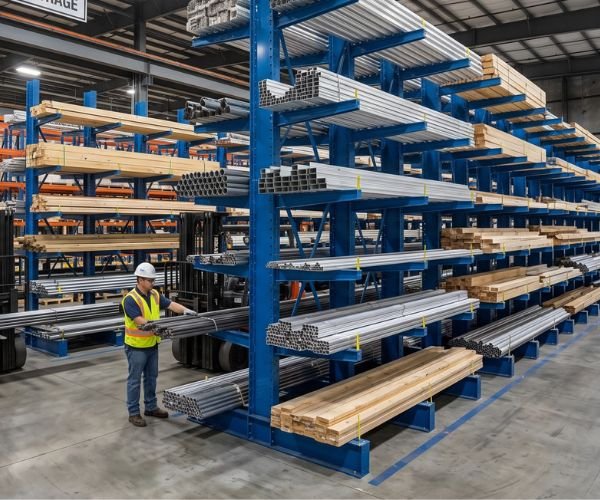
If the load geometry makes conventional pallet rack structures less suitable.
Explore:
Cantilever Racking
Deep-Lane Pallet Storage
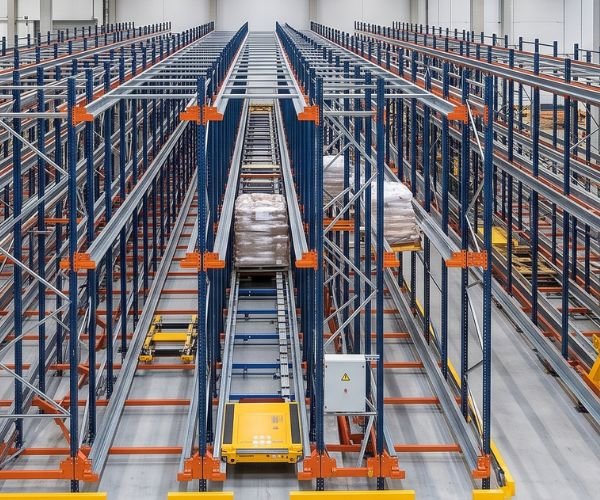
If deep pallet lanes and assisted pallet movement need to be evaluated together.
Explore:
Pallet Shuttle Racking
THE KEY TRADE-OFF
More Storage Density Is Not Always the Same as Better Storage.
Warehouse racking should be selected around the way inventory actually moves.
ACCESSIBILITY-ORIENTED STORAGE
When Access Matters
Some operations need frequent or direct access to a wide range of individual storage positions.
Relevant approaches may include:
- Selective Pallet Racking
- Long Span Racking
- suitable Multi-Tier configurations
Key questions:
- How many different SKUs are stored?
- How frequently are they accessed?
- Is individual load access important?
- How does picking take place?
DENSITY-ORIENTED STORAGE
When Storage Density Matters
Other operations may prioritise placing more pallet positions within the available storage footprint.
Relevant approaches may include:
- Drive-In Racking
- Pallet Shuttle Racking
Key questions:
- How many pallets belong to the same or similar stock group?
- How frequently does inventory move?
- How important is direct access to every pallet?
- How should pallets move within storage lanes?
The appropriate balance depends on the inventory profile and operating process.
DESIGN THE SYSTEM TOGETHER
The Rack and the Equipment Have to Work Together.
Racking geometry influences the equipment used to place, retrieve and move materials — and equipment characteristics can influence the practical storage layout.
A warehouse-racking discussion should therefore consider:
Aisle Space
The operating space available between storage structures.
Lift Requirement
The height at which loads need to be placed and retrieved.
Load & Pallet
Weight, dimensions, pallet configuration and load stability.
Material-Handling Equipment
The type of equipment expected to work within the storage area.
Turning & Manoeuvring
The space required for safe and practical material movement.
Material Flow
How inventory moves from receiving through storage, replenishment, picking and dispatch.
NGT can evaluate storage and material-handling requirements as connected parts of the intralogistics operation.
Storage Solutions Across Different Operating Environments.
Warehousing
Organise palletised and non-palletised inventory around storage and retrieval requirements.
Manufacturing
Support raw material, component, work-in-progress and finished-goods storage.
Logistics & 3PL
Support changing inventory profiles and distribution workflows.
E-commerce
Support suitable SKU storage, replenishment and fulfilment requirements.
Automotive
Support appropriate component, material and production-storage requirements.
Industrial Operations
Configure storage around specific loads, layouts and internal material-flow requirements.
APPLICATION-LED STORAGE
Start With the Warehouse Requirement, Not Just the Rack Type.
Load-Oriented Approach
Start by understanding what needs to be stored and how it is supported.
Layout Consideration
Evaluate available floor area, usable height and operating constraints.
Storage + Movement
Consider how material-handling equipment interacts with the storage system.
Multiple Racking Approaches
Evaluate different storage concepts rather than forcing every warehouse into one configuration.
Configurable Solutions
Adapt the storage approach around suitable pallet types, layouts and operational demands.
Broader Intralogistics View
Connect storage requirements with material movement, loading and warehouse workflow where relevant.