
MATERIAL FLOW & AUTOMATION
Conveyor Solutions That Keep Material Moving Between Processes.
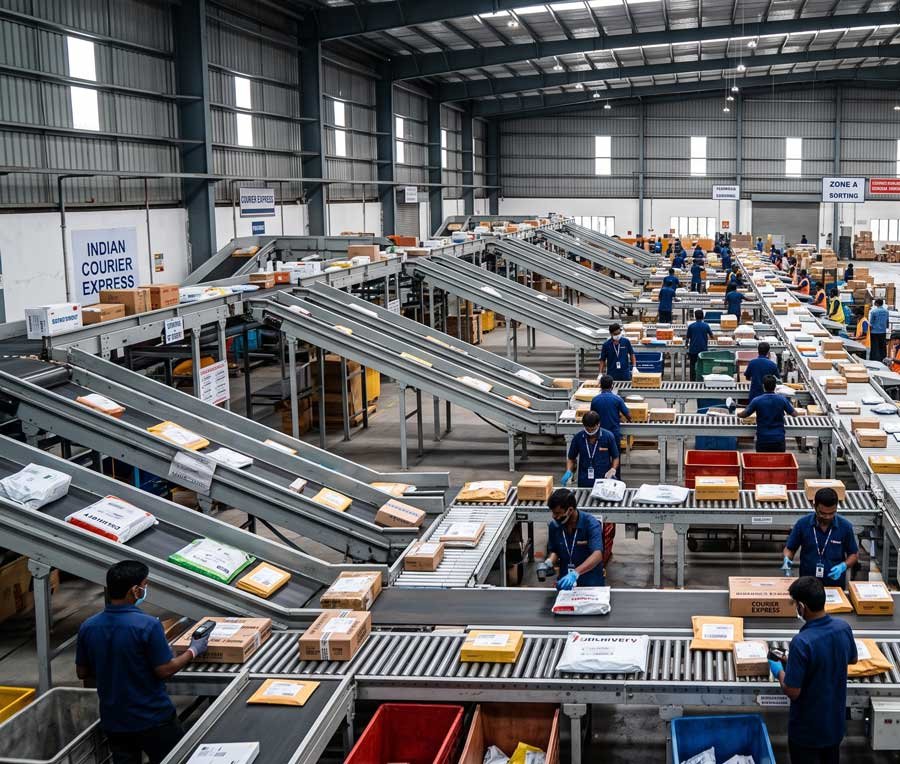
When materials move repeatedly between receiving, storage, production, picking, packing or dispatch, relying entirely on manual transport can interrupt the flow.
The right conveyor system can create a more defined movement path between operating areas.
NGT provides belt conveyors, roller conveyors and loading/unloading conveyor solutions configured around the load, route and material-flow requirement.
APPLICATION FIRST
A Conveyor Should Follow the Process, Not the Other Way Around.
The right conveyor depends on more than the distance between two points.
A conveyor requirement should consider:
- what needs to move
- load size and shape
- load stability
- movement direction
- horizontal or inclined travel
- required transfer points
- loading and unloading method
- available floor space
- operating frequency
- interaction with people and other equipment
- where the material needs to go next
NGT approaches conveyor selection around the complete movement path rather than starting with a standard conveyor type.
EXPLORE THE RANGE
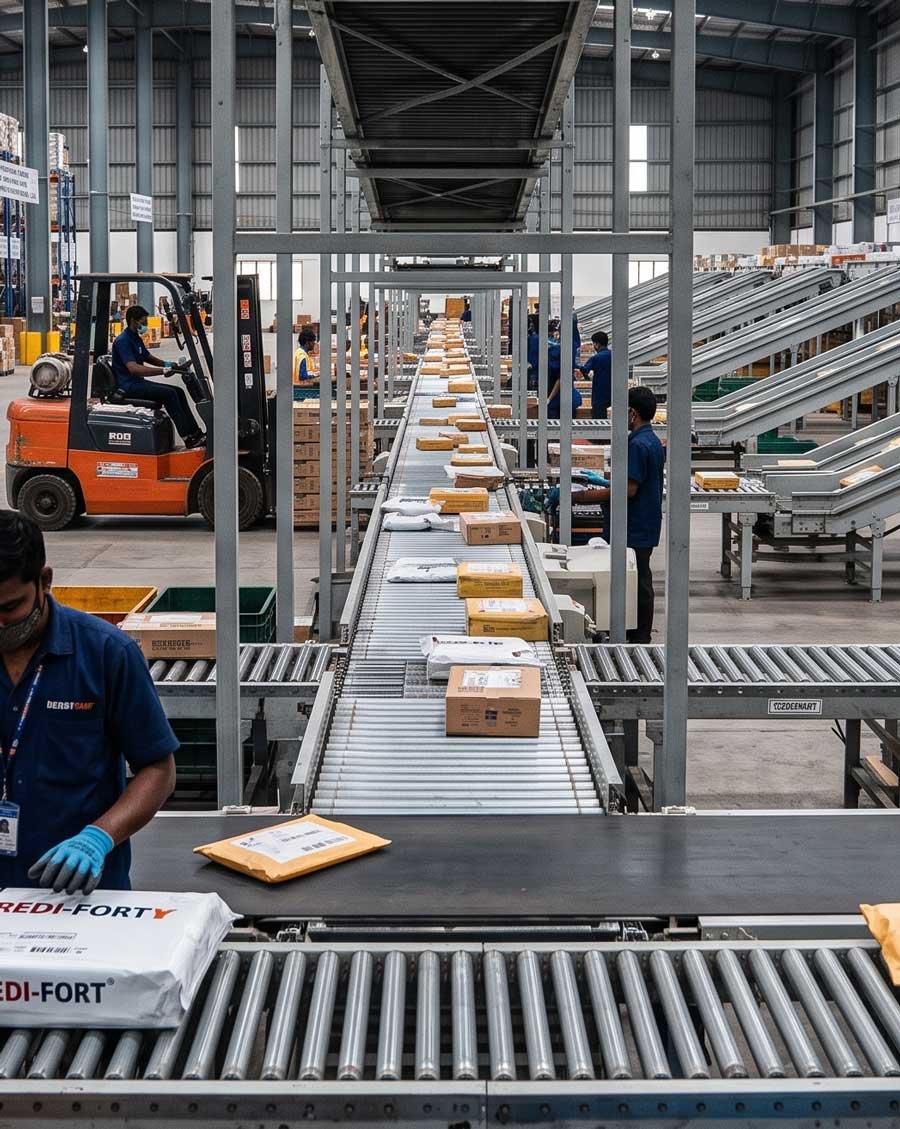
Different Conveyor Approaches for Different Material Movements.
The most suitable conveyor depends on the load, route and way material needs to enter, travel through and leave the system.
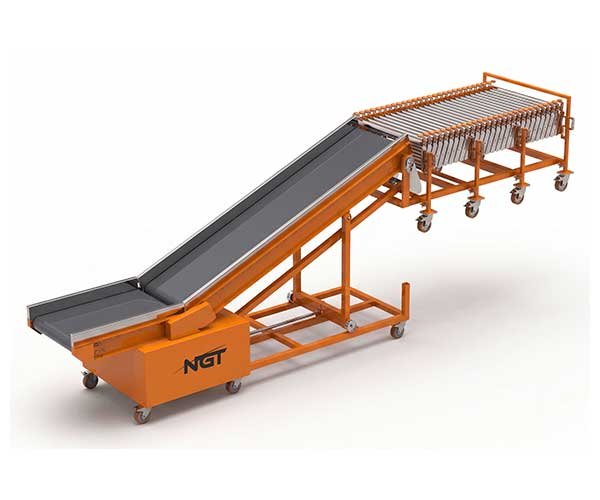
WHICH CONVEYOR APPROACH?
Start With the Movement You Need to Create.
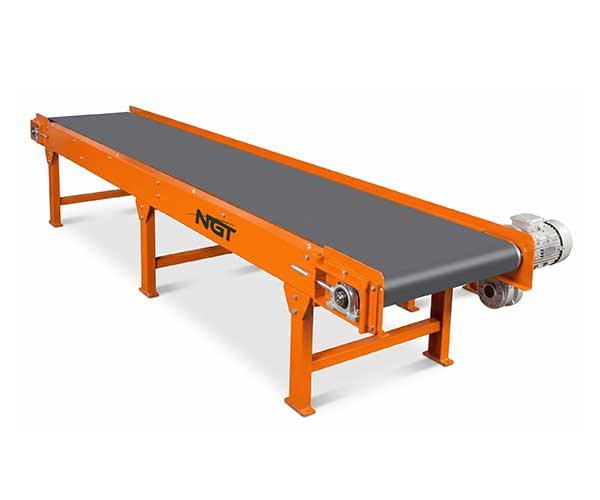
Continuous Surface Movement
When the load benefits from full support beneath it while travelling between points.
Explore:
Belt Conveyor
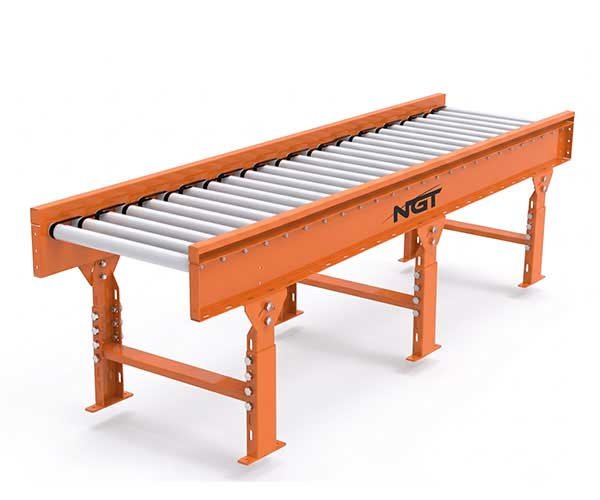
Carton / Tote Movement
Where suitable loads can move across a roller surface.
Explore:
Roller Conveyor
Flexible Vehicle Interface
Where the conveyor needs to adapt to changing loading or unloading positions.
Explore:
Flexible Conveyor
Move Between Heights
Where suitable material needs to move between different levels along an inclined route.
Explore:
Inclined Belt Conveyor
UNDERSTAND THE PATH
The Route Geometry Changes the Conveyor Requirement.
Horizontal Movement
For material travelling between operating areas at broadly the same working level.
Relevant:
Belt Conveyor
Roller Conveyor
Inclined Movement
For suitable loads that need to transition between different heights.
Relevant:
Inclined Belt Conveyor
Variable / Extendable Movement
For applications where the transfer route needs to change around the loading point.
Relevant:
Flexible Conveyor
BEFORE YOU DESIGN
The Right Conveyor Starts With the Material and the Route.
01
What Needs to Move?
Cartons, totes, components, packages or another load type.
02
What Are the Load Dimensions?
Understand the shape, footprint and way the load contacts the conveying surface.
03
Where Does It Start & End?
Define the origin, destination and intermediate transfer points.
04
Does the Route Change Level?
Determine whether movement is horizontal, inclined or involves multiple operating heights.
05
How Does It Interact With the Process?
Consider operators, machines, packing stations, vehicles, pallet-handling equipment and downstream processes.
NGT can use these details to identify the conveyor approach worth evaluating.
Load → Dimensions → Route → Levels → Process
CONNECTED MATERIAL FLOW
A Conveyor Is Most Valuable When It Connects the Workflow.
Receive
Transfer
Process
Pack
Stage
Dispatch
A conveyor system should not be designed as an isolated piece of equipment.
Its purpose is to connect material movement between operational steps.
Depending on the application, conveyor solutions can interface with receiving, storage, production, assembly, picking, packing, inspection, staging and vehicle loading or unloading.
NGT can evaluate the conveyor requirement as part of the broader intralogistics process.
BEYOND SIMPLE MOVEMENT
Automation Starts With a Defined Material Flow.
Not every conveyor system needs the same level of control or automation.
Some requirements may involve straightforward powered movement.
Others may need the conveyor to coordinate with upstream equipment, downstream equipment, production processes, packing operations, loading/unloading workflows or other material-flow systems.
The appropriate controls and integration should be determined around the actual process.
Define the Process Before the Controls
Control and automation requirements should only be specified after the material path, operating sequence and equipment interfaces have been defined.
This parent page does not assume PLC capabilities, sensor architecture, tracking, sorting logic, software integration, throughput or specific control-system architecture.
CONNECTED INTRALOGISTICS
Conveyors Often Work Between Other Material-Handling Processes.
Material Flow Across Different Operations.
Warehousing
Support suitable transfer between receiving, storage, picking, packing and dispatch.
Logistics & 3PL
Support repetitive carton and package movement across distribution workflows.
E-commerce & Fulfilment
Support suitable movement between picking, packing, staging and dispatch processes.
Manufacturing
Connect suitable production, assembly and material-transfer stages.
Food & Beverage
Evaluate suitable conveyor configurations around the material and operating environment.
Industrial Operations
Support repetitive internal movement of suitable components, containers and packages.
ONE CONVEYOR DOESN’T FIT EVERY PROCESS
The Load, Route and Process Determine the System.
Conveyor requirements can be affected by material type, dimensions and weight, conveyor length, transfer direction, changes in height, loading and unloading points, available floor space, surrounding machinery, operator interaction, process sequence and operating frequency.
The final system should therefore be configured after reviewing the actual material flow.
Application Review Inputs
- material type
- dimensions and weight
- route length and direction
- changes in height
- loading and unloading points
- available floor space
- surrounding machinery
- operator interaction
- process sequence
- operating frequency
Support Beyond Conveyor Supply.
SALES
Evaluate conveyor and material-flow solutions around the actual application.
SERVICE
Technical support and maintenance for applicable systems.
SPARES
Spare-parts support for applicable equipment.
NGT — Complete Intralogistics Solutions
Define the load, route and process first. Then evaluate the conveying approach that supports the required material flow.