
by Site Admin
Share
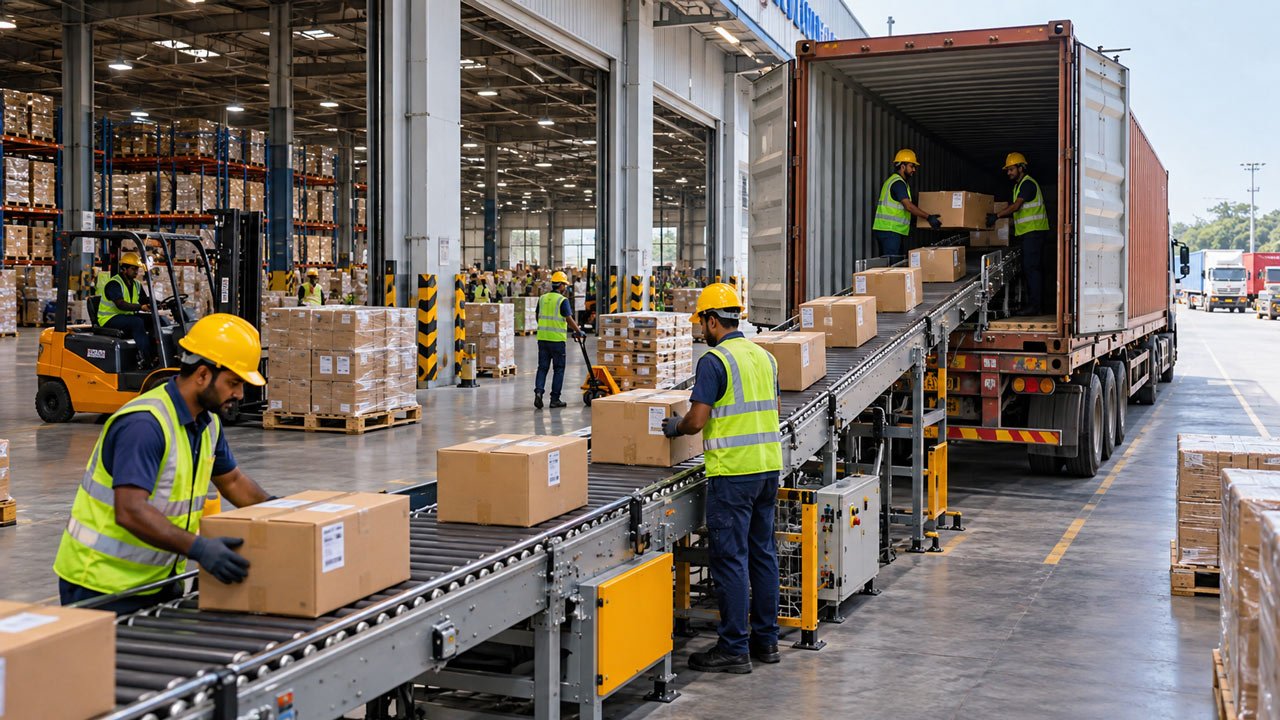
Here are seven ways to improve the process.
1. Reduce Manual Carrying
Repeated manual handling of cartons over long distances can slow operations and increase physical strain.
Conveyor systems can help move cartons between the vehicle and warehouse more efficiently.
2. Bring the Conveyor Into the Vehicle
A telescopic belt conveyor can extend toward the loading area of a truck, reducing the distance operators need to carry cartons.
3. Match the Working Height
Differences between warehouse floor level and vehicle bed height can make loading inefficient.
Dock levelers, ramps and lifting platforms can help bridge these height differences.
4. Use Mobile Systems Where Flexibility Is Needed
Some facilities handle several types of vehicles or use multiple loading locations.
A mobile loading or unloading conveyor can be repositioned according to operational needs.
5. Improve Dock Safety
Docking equipment should be selected with safety in mind.
6. Select Equipment Around Vehicle Type
Different trucks have different:
- bed heights;
- body lengths;
- openings;
- loading patterns.
The equipment should therefore be selected around the actual vehicle mix used at the facility.
7. Design the Entire Material Flow
The loading dock should not be considered in isolation.
The best results come when the movement from:
Truck → Dock → Conveyor → Warehouse → Storage
is designed as one continuous material flow.
Loading efficiency is not simply about moving faster.
The goal should be to reduce unnecessary handling, improve ergonomics and create a smoother flow between vehicles and the warehouse.
Planning a loading or unloading improvement project?
NGT can help evaluate dock equipment, conveyors and material handling options for your operation.