
QUICK COMMERCE
Fast Delivery Starts With Faster Material Flow.
Quick commerce depends on speed long before an order leaves for the customer.
Goods need to be received, stored, replenished, picked, staged and moved through compact fulfilment environments with minimal unnecessary handling.
NGT helps quick-commerce and fulfilment operations evaluate material handling, storage and intralogistics solutions around their actual workflow — supported by Sales, Service, Rentals and Spares.
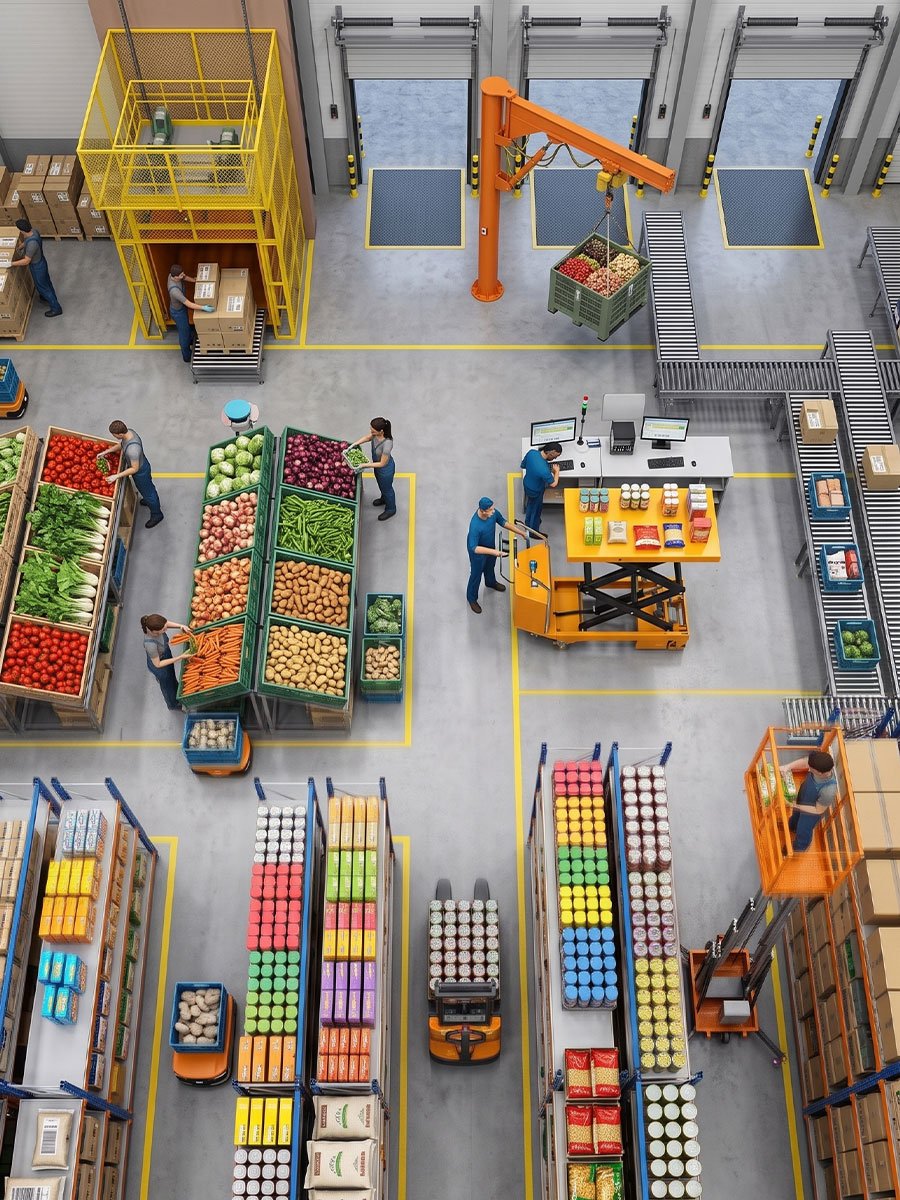
SPEED BEGINS INSIDE THE FACILITY
The delivery clock may start with the order. The operation starts much earlier.
Quick-commerce facilities need to keep inventory positioned and accessible before customer orders arrive.
That means receiving, put-away, replenishment, picking and staging all need to work together inside facilities where space can be limited and product movement is frequent.
The challenge is not simply moving more material.
It is reducing unnecessary movement and choosing equipment that fits the facility, the load and the operating rhythm.
That is where the right material-handling and intralogistics approach becomes important.
Speed begins inside the facility.
QUICK-COMMERCE CHALLENGES
When every minute matters, small handling delays add up quickly.
01
Rapid Inbound Movement
Incoming inventory needs to move efficiently from receiving into storage or replenishment areas so that goods become available for fulfilment.
02
Compact Operating Spaces
Dark stores and urban fulfilment locations may have tighter aisles, smaller staging areas and less manoeuvring space than conventional warehouses.
03
Frequent Replenishment
Fast-moving SKUs can require repeated stock movement from reserve storage towards picking locations throughout the operating day.
04
High Picking Activity
Frequent order fulfilment means goods need to remain accessible while internal movement continues around picking teams.
05
Managing Different Load Formats
Operations may handle pallets, cartons, totes, crates, packaged goods and individual inventory units at different stages of the process.
06
Dispatch Staging
Completed orders need to move efficiently into staging and rider/vehicle handover areas without creating unnecessary congestion.
07
Peak Demand & Capacity Changes
Order volumes can fluctuate by time of day, season, location, campaigns and customer demand.
08
Equipment Availability
When frequently used handling equipment is unavailable, replenishment, receiving or internal stock movement can be affected.
WHERE NGT FITS INTO THE QUICK-COMMERCE FLOW
Material movement behind fast fulfilment
01
Receiving
Move incoming inventory from delivery vehicles or receiving areas into the facility.
Relevant NGT Solution Areas
- Pallet Trucks
- Powered Pallet Trucks
- Stackers
- Dock Solutions
- Telescopic Belt Conveyors
02
Put-Away
Move incoming goods from receiving and staging towards assigned storage areas.
Relevant NGT Solution Areas
- Pallet Trucks
- Powered Pallet Trucks
- Stackers
- Material Handling Equipment
03
Storage
Support organised inventory positioning within the available fulfilment footprint.
Relevant NGT Solution Areas
- Storage & Racking Solutions
- Stackers
- Pallet Handling Equipment
- Customized Storage / Handling Solutions where applicable
04
Replenishment
Move reserve inventory towards active picking locations as stock levels change.
Relevant NGT Solution Areas
- Powered Pallet Trucks
- Pallet Trucks
- Stackers
- Conveyor & Material Flow Solutions
05
Picking & Order Movement
Support movement of cartons, totes or goods through appropriate picking and consolidation workflows.
Relevant NGT Solution Areas
- Order Picking Solutions
- Conveyor Solutions
- Material Flow Solutions
- Customized Handling Solutions
06
Staging & Dispatch
Move completed orders and goods towards staging, loading or handover points.
Relevant NGT Solution Areas
- Pallet Trucks
- Powered Pallet Trucks
- Conveyor Solutions
- Telescopic Belt Conveyors
- Loading Solutions
Final equipment selection depends on the facility layout, load type, aisle width, movement frequency, travel distance, storage configuration and operating duty.
HOW NGT CAN HELP
Design the handling around the fulfilment flow.
A quick-commerce facility does not automatically need larger or more equipment. It needs the right equipment in the right part of the operation.
01
Understand the Facility
Evaluate receiving areas, aisles, storage zones, picking areas, staging space and movement routes.
02
Understand the Inventory Flow
Identify how goods move from receiving to reserve storage, picking, replenishment and dispatch.
03
Match Equipment to the Movement
Evaluate suitable equipment for pallet movement, lifting, replenishment, carton movement or loading requirements.
04
Work Within Space Constraints
Consider turning space, aisle width, doorways, storage configuration and congestion points before selecting equipment.
05
Connect Multiple Handling Stages
Where appropriate, handling equipment, storage and material-flow solutions can be evaluated as connected parts of the fulfilment process.
06
Support the Operation After Deployment
Service, preventive maintenance and spare-parts support help keep frequently used handling equipment available.
SPACE + SPEED
In quick commerce, every metre of movement matters.
A conventional warehouse can often separate receiving, storage, picking and dispatch across large operating areas.
Quick-commerce environments can be very different.
Several activities may need to operate within a compact footprint:
- receiving
- reserve storage
- replenishment
- picking
- order consolidation
- staging
- rider or vehicle handover
That makes equipment size, movement paths, storage configuration and staging space especially important.
The objective should not simply be to introduce more equipment.
It should be to create smoother material flow within the space available.
REPLENISHMENT IS THE HIDDEN ENGINE OF QUICK COMMERCE
Picking can only stay fast when inventory stays available.
Fast order fulfilment depends on more than picking speed.
When active picking locations begin to run low, stock needs to move from receiving or reserve storage into the required fulfilment locations without unnecessarily interfering with ongoing picking activity.
A well-planned replenishment flow should consider:
- where reserve inventory is stored
- how frequently goods need replenishment
- what load format is being moved
- distance between storage and picking
- available aisle space
- movement during peak operating periods
- interaction between people and material-handling equipment
NGT can help evaluate the relevant equipment and material-flow approach around these operational requirements.
SALES | SERVICE | RENTALS | SPARES
Fast-moving operations need equipment that is ready to work.
Where handling equipment supports daily receiving, replenishment and fulfilment activity, ongoing technical support becomes an important part of the overall solution.
SALES
Material handling and intralogistics equipment for fulfilment and warehouse requirements.
SERVICE
Technical support, preventive maintenance and breakdown-service capability.
RENTALS
Rental equipment options for suitable temporary, peak-demand or additional-capacity requirements.
SPARES
Spare-parts support for material-handling equipment.
NGT — Complete Intralogistics Solutions
Sales | Service | Rentals | Spares
WHY NGT FOR QUICK COMMERCE?
A material-handling approach built around operational flow.
01
Application-Oriented Approach
Start with how inventory actually moves through the facility rather than selecting equipment in isolation.
02
Compact-Space Consideration
Evaluate equipment around aisle widths, storage layouts, turning space and other site constraints.
03
Material Handling + Storage
Consider movement and storage requirements as connected parts of the same fulfilment operation.
04
Standard + Customized Solutions
Use standard equipment where it fits and evaluate customized handling where the facility requires something different.
05
Sales + Rentals
Purchase and rental options can be considered for different operating or capacity requirements where applicable.
06
Service & Spare Support
NGT’s proposition extends beyond equipment supply through maintenance, technical service and spare-parts support.
HELP US UNDERSTAND YOUR FULFILMENT OPERATION
The right solution starts with understanding the flow.
01
What are you moving?
Pallets, cartons, totes, crates, packaged goods or another load format.
02
How does inventory arrive?
Palletised loads, cartons, loose packages or other inbound formats.
03
How is inventory stored?
Reserve pallet storage, shelving, racks, picking locations or a combination of formats.
04
How does replenishment happen?
From receiving or reserve stock towards active picking and fulfilment locations.
05
What space is available?
Aisle width, turning areas, doorway clearances, staging space and storage configuration.
06
How intensive is the operation?
Movement frequency, operating hours, peak periods and expected equipment utilisation.
NGT can then evaluate the relevant material-handling, storage or material-flow solution categories for the application.
DISCUSS YOUR FULFILMENT REQUIREMENT
Fast fulfilment starts before the order is picked.
Whether you are setting up a new fulfilment location, expanding an existing dark store, improving replenishment flow or solving a specific internal material-movement challenge, start with the operation.
Tell Us How Your Fulfilment Centre Needs to Move.
We’ll help evaluate the relevant material-handling and intralogistics solution for your requirement.