
RENEWABLE ENERGY
Material Handling for the Energy Systems of Tomorrow.
Renewable-energy operations involve more than manufacturing equipment.
Components, raw materials, modules, electrical assemblies, batteries, packaging and finished products all need to move safely and efficiently through receiving, storage, production and dispatch.
NGT helps renewable-energy operations evaluate material handling, lifting, storage and intralogistics solutions around their actual workflow — supported by Sales, Service, Rentals and Spares.
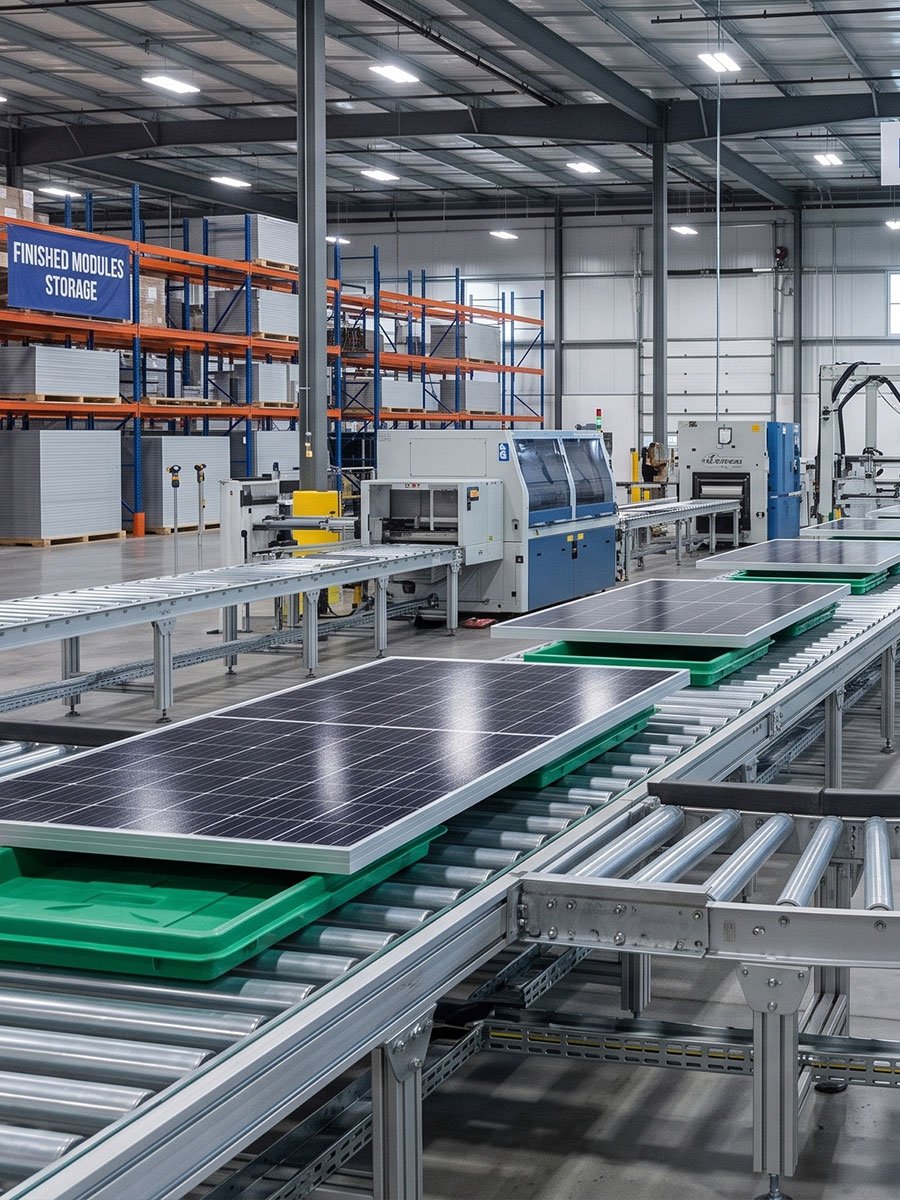
MATERIAL FLOW BEHIND ENERGY TECHNOLOGY
New energy products still depend on efficient physical movement.
Renewable-energy manufacturing and supply-chain operations can involve a wide variety of materials and components.
Raw materials need to reach production. Components and assemblies move between process stages. Finished products require careful movement into inspection, packing, storage and dispatch.
Some loads may be conventional pallets.
Others may be fragile, unusually shaped, high-value or sensitive to the way they are lifted and positioned.
That means material-handling equipment should be selected around the actual product, process and operating environment — rather than applying one standard solution across every application.
Energy technology changes. Material still needs to move.
RENEWABLE-ENERGY CHALLENGES
Different energy technologies create different material-handling challenges.
01
Handling Fragile & High-Value Components
Certain energy components and assemblies may require careful movement to reduce the risk of damage during transport, positioning or process transfer.
02
Moving Different Load Formats
Operations may involve pallets, cartons, frames, panels, electrical assemblies, containers, drums, reels or other specialised loads.
03
Production-Line Material Supply
Components and raw materials need to move reliably from storage and staging areas towards manufacturing or assembly processes.
04
Work-in-Progress Movement
Products may pass through multiple manufacturing, assembly, testing and inspection stages before becoming finished goods.
05
Lifting & Positioning Requirements
Some operations require components to be elevated, positioned or transferred rather than simply transported horizontally.
06
Space & Layout Constraints
Production equipment, workstations, storage systems and safety zones can limit equipment manoeuvring space.
07
Equipment Availability
Material-handling downtime can interrupt movement between warehouse, production and dispatch operations.
08
Changing Production Capacity
New product programmes, project demand, additional production lines or facility expansion can change material-handling requirements over time.
WHERE NGT FITS INTO THE RENEWABLE-ENERGY FLOW
Material handling across the operational journey
01
Receiving
Move incoming raw materials, components, packaging and palletised goods into receiving or staging areas.
Relevant NGT Solution Areas
- Forklifts
- Pallet Trucks
- Powered Pallet Trucks
- Dock Solutions
- Telescopic Belt Conveyors
02
Material & Component Storage
Support movement, stacking and retrieval within stores and warehouse areas.
Relevant NGT Solution Areas
- Reach Trucks
- Stackers
- Forklifts
- Pallet Trucks
- Storage & Racking Solutions
03
Production Supply
Move suitable materials and components from stores towards manufacturing or assembly areas.
Relevant NGT Solution Areas
- Powered Pallet Trucks
- Pallet Trucks
- Stackers
- Conveyor & Material Flow Solutions
- Customized Material Handling
04
Work-in-Progress & Assembly
Support movement and positioning between manufacturing, assembly, testing and inspection stages.
Relevant NGT Solution Areas
- Pallet Trucks
- Stackers
- Scissor Lifts
- Vacuum Lifting Solutions
- Goods Lifts
- Customized Handling Equipment
05
Finished Goods
Move completed products from production towards inspection, packing, storage or staging.
Relevant NGT Solution Areas
- Forklifts
- Pallet Trucks
- Powered Pallet Trucks
- Stackers
- Conveyor Solutions
- Stretch Wrapping Solutions
06
Dispatch
Support movement of finished goods from storage or staging towards outbound vehicles.
Relevant NGT Solution Areas
- Forklifts
- Pallet Trucks
- Dock Solutions
- Telescopic Belt Conveyors
- Loading Solutions
Final equipment selection depends on the load, dimensions, handling points, fragility, movement route, lifting requirement, available space, operating environment and expected duty.
HOW NGT CAN HELP
Start with the component and the process, then select the equipment.
Renewable-energy applications can vary significantly in load size, geometry and handling requirements. NGT evaluates the actual application before identifying the relevant equipment or solution route.
01
Understand the Load
Identify what needs to move, including its weight, dimensions, shape, fragility and available lifting or support points.
02
Understand the Process
Determine where the material originates, where it needs to go and what manufacturing or assembly stages occur between those points.
03
Select the Relevant Handling Method
Evaluate whether the requirement involves transportation, lifting, positioning, stacking, storage or process transfer.
04
Protect Sensitive Loads
Where components require careful handling, the lifting and support method should be evaluated around the actual product.
05
Address Non-Standard Requirements
Where conventional equipment does not adequately match the component, layout or process interface, customized material-handling solutions can be evaluated.
06
Support Equipment After Deployment
Service, preventive maintenance and spare-parts support help keep material-handling equipment available for ongoing operations.
BEYOND STANDARD PALLETS
Some energy components need more than conventional material handling.
Renewable-energy operations may involve products whose size, geometry, surface or value makes handling more application-specific.
Examples can include:
- panels and framed products
- electrical assemblies
- battery-related components
- cabinets and enclosures
- reels and coils
- long components
- sensitive finished products
- custom frames or stillages
- loads with restricted lifting points
For these applications, the equipment should be evaluated around how the load can be safely supported, lifted, transported and positioned.
Where standard equipment does not adequately match the requirement, NGT can evaluate a customized material-handling approach.
APPLICATION QUALIFICATION
Special operating conditions need specific equipment evaluation.
Battery and energy-storage manufacturing or handling environments can introduce requirements that differ from conventional warehouse applications.
Depending on the process, considerations may include:
- load weight and concentration
- electrical environment
- material sensitivity
- temperature
- restricted process areas
- handling of modules or assemblies
- cleaning requirements
- site-specific safety procedures
These conditions should be identified before material-handling equipment is selected.
Electrical protection, hazardous-area suitability, fire-safety requirements, battery-area compatibility and other special technical requirements must be confirmed for the specific equipment and application before use.
NGT should not present standard equipment as suitable for these environments without technical qualification.
FLEXIBILITY AS REQUIREMENTS CHANGE
Production and project demand do not always stay constant.
Renewable-energy businesses may expand capacity, commission new production lines, introduce new products or experience project-driven changes in material movement.
That can create temporary or evolving requirements for:
- additional handling equipment
- changing storage capacity
- new movement routes
- increased loading activity
- different lifting requirements
- additional equipment during expansion or commissioning
Where appropriate, NGT can evaluate both equipment supply and rental options based on the operational requirement and equipment availability.
SALES | SERVICE | RENTALS | SPARES
The equipment supporting production needs support too.
Material-handling equipment can become part of daily warehouse and manufacturing activity, making ongoing technical support important beyond initial supply.
SALES
Material handling and intralogistics equipment for suitable renewable-energy manufacturing, warehouse and industrial applications.
SERVICE
Technical support, preventive maintenance and breakdown-service capability.
RENTALS
Rental equipment options for appropriate temporary, project-driven or additional-capacity requirements.
SPARES
Spare-parts support for material-handling equipment.
NGT — Complete Intralogistics Solutions
Sales | Service | Rentals | Spares
WHY NGT FOR RENEWABLE ENERGY?
A material-handling approach built around the application.
01
Application-Oriented Selection
Start with the component, process and movement requirement before identifying equipment.
02
Broad Intralogistics Portfolio
Evaluate transport, lifting, positioning, storage, loading and material-flow requirements across multiple solution categories.
03
Standard + Customized Solutions
Use conventional equipment where suitable and evaluate customization where the product or process requires a different approach.
04
Connected Material Flow
Consider movement across receiving, stores, production, work-in-progress and dispatch rather than treating each requirement independently.
05
Sales + Rentals
Different production or project requirements can be evaluated through purchase or rental options where appropriate.
06
Service & Spare Support
NGT’s proposition extends beyond equipment supply through maintenance, technical service and spare-parts support.
HELP US UNDERSTAND YOUR APPLICATION
The right solution starts with the component and its movement.
01
What are you moving?
Pallets, panels, modules, cabinets, assemblies, reels, components, packaged products or another load.
02
What is the load?
Maximum weight, dimensions, geometry, fragility and available support or lifting points.
03
Where does it move?
Receiving, warehouse, manufacturing, assembly, testing, packing, finished-goods storage or dispatch.
04
How does it need to be handled?
Transported, lifted, stacked, positioned, transferred or moved vertically.
05
What space is available?
Aisle width, production layout, turning area, machine clearance, doorway or other access restrictions.
06
Are there special operating conditions?
Electrical, environmental, temperature, surface, safety or other site-specific requirements should be identified before equipment selection.
NGT can then evaluate the relevant material-handling solution and identify where further technical qualification may be required.
DISCUSS YOUR MATERIAL HANDLING REQUIREMENT
New energy manufacturing still depends on one fundamental requirement – movement.
Whether you are setting up a new production facility, expanding capacity, introducing a new product or solving a specific material-handling challenge, start with the actual application.
Tell NGT What Needs to Move.
We’ll help evaluate the relevant material-handling and intralogistics solution for your renewable-energy operation.