
E-COMMERCE
Move Inventory Faster. Keep Fulfilment Flowing.
E-commerce fulfilment depends on efficient movement across every stage of the operation.
From inbound receiving and storage to replenishment, picking, packing, returns and dispatch, thousands of individual material movements need to work together.
NGT helps e-commerce and fulfilment operations evaluate material handling, storage and intralogistics solutions around their actual workflow — supported by Sales, Service, Rentals and Spares.
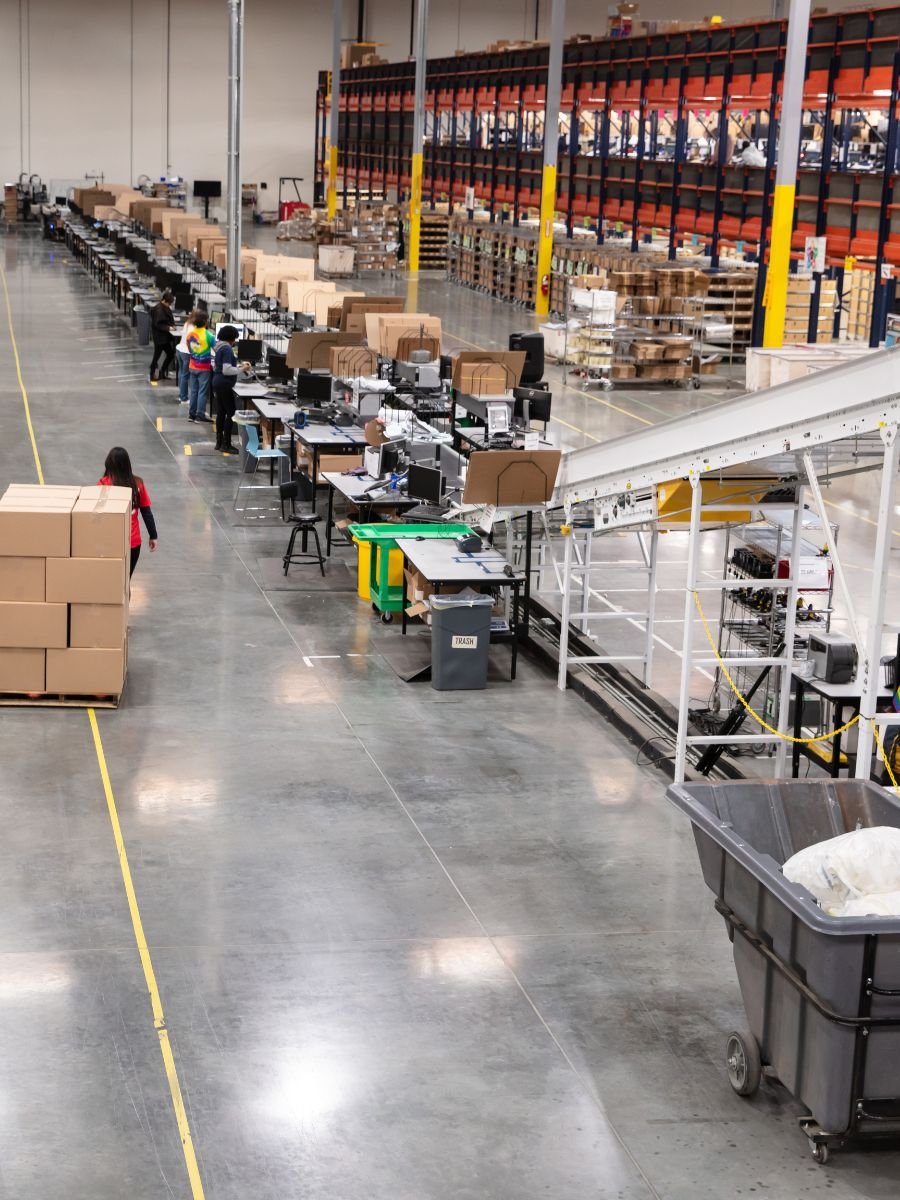
FULFILMENT IS A MATERIAL-FLOW CHALLENGE
Every order depends on dozens of movements before it reaches dispatch.
E-commerce operations can manage thousands of SKUs across receiving, reserve storage, picking, replenishment, packing, returns and dispatch.
Inventory may arrive on pallets but leave as individual cartons or parcels.
That means different parts of the fulfilment centre can require very different handling approaches.
The challenge is not simply moving goods faster.
It is creating a material-flow system where storage, equipment and movement work together as order volumes change.
Every order depends on the material flow behind it.
E-COMMERCE CHALLENGES
High order volumes expose every weakness in the fulfilment flow.
01
High Inbound Volumes
Large quantities of inventory need to move efficiently from receiving into storage or staging without creating congestion.
02
Large & Changing SKU Mix
Different product dimensions, packaging formats and inventory profiles can create varied storage and handling requirements.
03
Storage Space Utilisation
Growing inventory places pressure on available floor area, rack utilisation and access to stored products.
04
Continuous Replenishment
Picking areas depend on inventory being replenished from reserve storage throughout the operating day.
05
High Picking & Packing Activity
Goods need to move efficiently between storage, picking, consolidation and packing while multiple processes operate simultaneously.
06
Peak Demand
Sales events, festive periods, campaigns and seasonal demand can significantly increase fulfilment activity.
07
Returns Handling
Returned products may need to move through receiving, inspection, sorting, storage or disposal workflows.
08
Equipment Availability
Handling-equipment downtime can affect receiving, replenishment, picking support and dispatch operations.
WHERE NGT FITS INTO THE E-COMMERCE FLOW
Material movement across the fulfilment journey
01
Receiving
Move inbound pallets, cartons and inventory from vehicles into receiving and staging areas.
Relevant NGT Solution Areas
- Forklifts
- Pallet Trucks
- Powered Pallet Trucks
- Dock Solutions
- Telescopic Belt Conveyors
02
Put-Away
Move incoming inventory from receiving or staging towards storage locations.
Relevant NGT Solution Areas
- Forklifts
- Reach Trucks
- Stackers
- Powered Pallet Trucks
03
Storage
Support organised inventory storage and access across reserve and active-stock areas.
Relevant NGT Solution Areas
- Reach Trucks
- Stackers
- Storage & Racking Solutions
- Pallet Handling Equipment
04
Replenishment
Move inventory from reserve storage towards picking or forward-stock locations.
Relevant NGT Solution Areas
- Powered Pallet Trucks
- Pallet Trucks
- Stackers
- Reach Trucks
- Material Flow Solutions
05
Picking & Packing
Support movement of goods, cartons or totes between storage, picking, consolidation and packing areas.
Relevant NGT Solution Areas
- Order Picking Solutions
- Conveyor Systems
- Material Flow Solutions
- Goods Lifts
- Customized Handling Solutions
06
Dispatch
Move completed orders and palletised goods from staging towards outbound loading.
Relevant NGT Solution Areas
- Pallet Trucks
- Powered Pallet Trucks
- Forklifts
- Dock Solutions
- Telescopic Belt Conveyors
Returns reverse-flow path: Receiving → Inspection → Sorting → Restocking / Holding / Further Processing
Relevant handling and material-flow requirements can be evaluated based on the actual returns process.
Final equipment selection depends on the load format, storage layout, aisle width, lifting requirement, travel distance, movement frequency and operating duty.
HOW NGT CAN HELP
Build the handling around the fulfilment process.
Different parts of an e-commerce fulfilment centre can require different types of equipment and material-flow solutions.
NGT evaluates the operation before identifying the relevant solution.
01
Understand the Inventory Flow
Map how products move from receiving through storage, picking, packing and dispatch.
02
Understand the Storage Environment
Evaluate racks, aisles, storage heights, staging areas and movement routes.
03
Match Equipment to Each Task
Identify suitable equipment for pallet movement, stacking, retrieval, picking support, loading or internal transport.
04
Connect Different Handling Stages
Where appropriate, equipment, storage and material-flow solutions can be considered together rather than as isolated purchases.
05
Plan for Changing Demand
Equipment and rental options can be evaluated where operations need additional handling capacity during suitable peak or expansion requirements.
06
Support Equipment After Deployment
Service, maintenance and spare-parts support help keep handling equipment available during daily fulfilment operations.
SPACE + ACCESS
More inventory is useful only when fulfilment teams can access it efficiently.
E-commerce fulfilment requires a balance between storage capacity and product accessibility.
Increasing storage density without considering how goods will be retrieved and replenished can create operational constraints.
Important considerations include:
- rack configuration
- aisle width
- pallet dimensions
- storage height
- SKU velocity
- replenishment frequency
- picking method
- travel distance
- staging requirements
The material-handling equipment should therefore be evaluated alongside the storage and fulfilment layout.
SCALABLE CAPACITY
Your busiest weeks should not be planned like an average day.
E-commerce activity can change significantly during festive seasons, campaigns, promotions or other high-demand periods.
Higher throughput may increase requirements across:
- inbound receiving
- put-away
- replenishment
- picking support
- pallet movement
- packing and staging
- outbound loading
Where appropriate, additional equipment or rental options can be evaluated to support temporary or changing capacity requirements.
Rental availability and equipment suitability should be confirmed for the specific requirement.
REVERSE LOGISTICS
Fulfilment does not always end at dispatch.
E-commerce operations can also manage a significant reverse flow of goods.
Returned items may need to move through:
The returns area should therefore be considered as another material-flow operation rather than an isolated back-room activity.
NGT can help evaluate appropriate handling or movement solutions around the actual returns workflow.
SALES | SERVICE | RENTALS | SPARES
Fulfilment depends on equipment that stays available.
Where handling equipment supports daily inventory movement, storage and dispatch, ongoing support becomes part of the overall operational requirement.
SALES
Material handling and intralogistics equipment for warehouse and fulfilment operations.
SERVICE
Technical support, preventive maintenance and breakdown-service capability.
RENTALS
Rental equipment options for appropriate temporary, seasonal or additional-capacity requirements.
SPARES
Spare-parts support for material-handling equipment.
NGT — Complete Intralogistics Solutions
Sales | Service | Rentals | Spares
WHY NGT FOR E-COMMERCE?
A broader approach to fulfilment material handling.
01
Application-Oriented Approach
Start with how inventory moves through the fulfilment centre rather than selecting equipment in isolation.
02
Material Handling + Storage
Evaluate movement and storage requirements as connected parts of the overall fulfilment operation.
03
Broad Intralogistics Portfolio
Access solution categories for transport, lifting, storage, picking support, loading and material flow.
04
Standard + Customized Solutions
Use standard equipment where appropriate and evaluate customized solutions where the process requires something different.
05
Sales + Rentals
Different operating requirements can be evaluated through equipment purchase or rental where applicable.
06
Service & Spare Support
NGT supports the equipment lifecycle through technical service, maintenance and spare-parts support.
HELP US UNDERSTAND YOUR FULFILMENT CENTRE
The right solution starts with the actual operation.
01
What are you moving?
Pallets, cartons, totes, crates, packages or other inventory formats.
02
How does inventory arrive?
Full pallets, mixed pallets, cartons, parcels or another inbound format.
03
How is inventory stored?
Pallet racking, shelving, bins, reserve storage, active picking locations or a combination.
04
How does fulfilment work?
Picking method, replenishment flow, packing process and dispatch staging.
05
What are the facility constraints?
Aisle width, storage height, turning space, doorways and available staging area.
06
How does demand change?
Daily operating volume, shift pattern, peak periods and seasonal requirements.
NGT can then evaluate the relevant material-handling, storage and material-flow solution categories for the fulfilment operation.
DISCUSS YOUR FULFILMENT REQUIREMENT
Every order starts with efficient movement inside the fulfilment centre.
Whether you are setting up a new fulfilment centre, increasing storage capacity, improving replenishment, preparing for peak demand or solving a specific handling problem, start with the actual workflow.
Tell Us How Your Fulfilment Operation Needs to Move.
We’ll help evaluate the relevant material-handling and intralogistics solution for your e-commerce operation.