
by Site Admin
Share
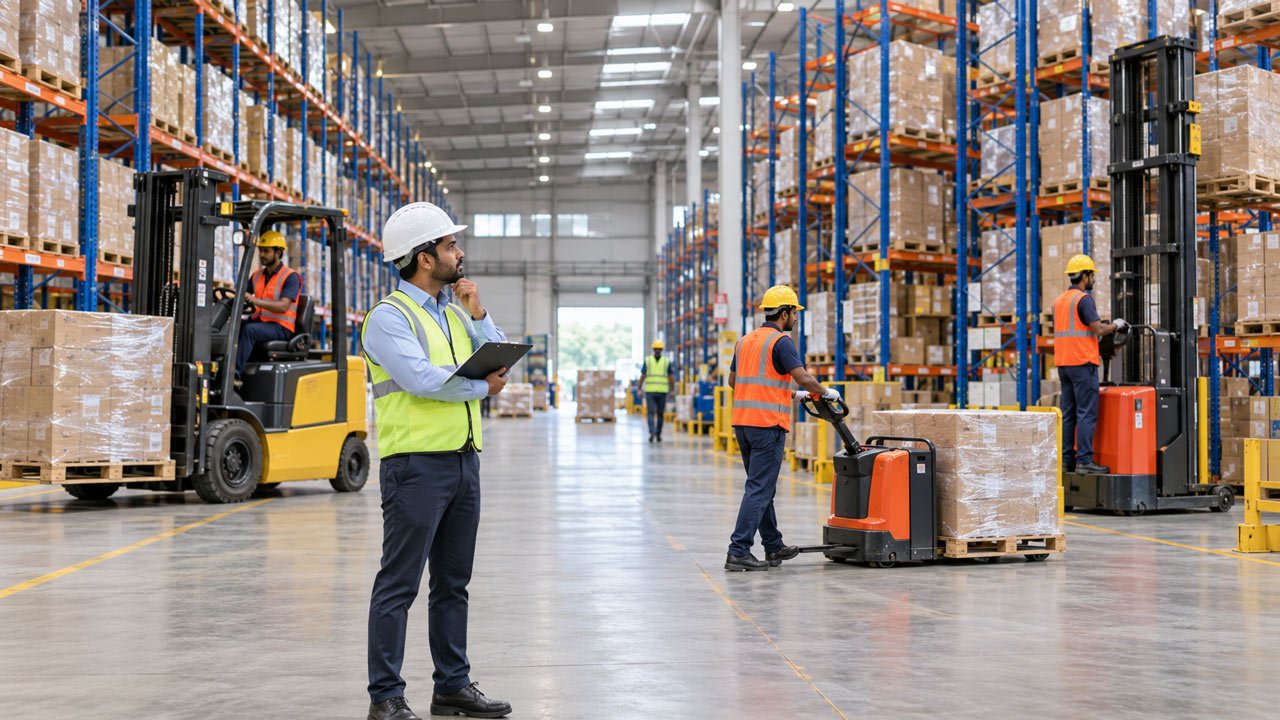
Material handling equipment has a direct impact on warehouse productivity, operator safety and the overall movement of goods.
Choosing the right machine is not simply a matter of comparing capacities. The equipment must match the load, operating environment, lift height, travel distance and workflow of the warehouse.
At Newgentech Solutions, our material handling portfolio includes pallet trucks, stackers, reach trucks, forklifts, tuggers, drum handling equipment and other specialized solutions.
Here are some of the most important factors to consider before selecting equipment.
1. Understand the Load
Start with the weight and dimensions of the material being handled.
A standard pallet truck may be suitable for routine pallet movement, while heavier or unusual loads may require:
- heavy-duty pallet trucks;
- wide or narrow forks;
- long or short forks;
- single-fork configurations;
- specialized attachments.
The NGT product range also includes customized configurations for applications such as reel handling and non-standard material movement.
2. Consider the Required Lift Height
If goods only need to move horizontally, a pallet truck may be sufficient.
For vertical lifting and stacking, the requirement may shift toward:
- manual stackers;
- semi-electric stackers;
- electric stackers;
- walkie stackers;
- reach stackers;
- counterbalance stackers;
- reach trucks;
- forklifts.
The correct lift height should always be considered together with load capacity and rack configuration.
3. Evaluate Travel Distance
For short-distance pallet movement, manual equipment can often be practical.
For longer warehouse travel distances, powered equipment can improve productivity and reduce operator fatigue.
Electric pallet trucks, stand-on pallet trucks, tuggers and forklifts are generally more suitable for applications where goods are moved repeatedly throughout the day.
4. Review Aisle Width and Available Space
Warehouse space can significantly influence equipment selection.
Narrow aisles may require compact equipment, while high-density storage areas may benefit from reach trucks or specialized stackers.
Before choosing a machine, consider:
- aisle width;
- turning radius;
- pallet dimensions;
- rack height;
- floor conditions;
- operating clearances.
5. Consider the Operating Environment
Equipment used indoors may have different requirements from equipment used in outdoor yards, production plants or special environments.
Factors such as flooring, dust, moisture, temperature and frequency of use should form part of the selection process.
6. Think Beyond Standard Equipment
Not every material handling problem can be solved with an off-the-shelf machine.
NGT’s brochure emphasizes customized engineering, including modified fork arrangements, attachments and purpose-built material handling solutions for specific operational needs.
Conclusion
The best material handling equipment is the equipment that fits the operation—not simply the equipment with the highest capacity.
A proper assessment of the load, lift height, aisle space, travel distance and workflow can help businesses improve productivity while avoiding unnecessary investment.