
by Site Admin
Share
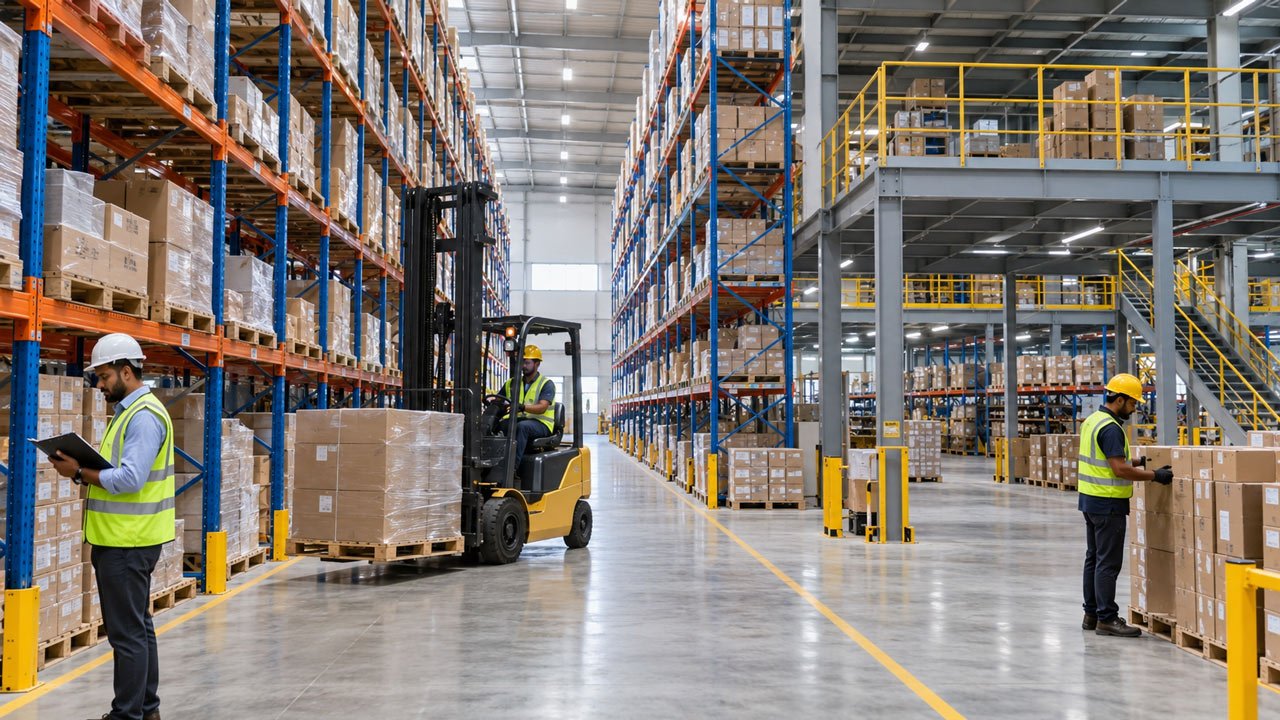
A warehouse racking system is more than a storage structure. It directly affects space utilization, accessibility, material flow and overall warehouse efficiency.
The right system depends on what is being stored, how frequently it is accessed and how the warehouse operates.
1. Selective Pallet Racking
Selective pallet racking is one of the most common warehouse storage systems.
It is suitable when easy access to individual pallets is important.
This type of racking works well for:
- warehouses with multiple SKUs;
- frequent pallet movement;
- operations requiring direct access;
- general-purpose storage.
2. Drive-In / Drive-Through Racking
Drive-in and drive-through systems are designed for higher-density pallet storage.
Forklifts enter the rack structure to place or retrieve pallets.
This can be useful where:
- storage density is more important than individual pallet accessibility;
- there are large quantities of similar products;
- floor space is limited.
3. Cantilever Racking
Cantilever racking is designed for long or irregular materials.
Typical applications include:
- pipes;
- profiles;
- timber;
- long fabricated components;
- sheet materials.
Because the rack does not have front columns obstructing access, long loads can be handled more easily.
4. Mezzanine Floor Systems
A mezzanine floor adds another usable level inside the existing warehouse.
This can help businesses increase storage or working space without expanding the building footprint.
It can be used for:
- additional storage;
- picking operations;
- work areas;
- multi-level material handling.
5. Pallet Shuttle Racking
Pallet shuttle systems are designed for high-density storage where pallets are moved inside the rack using a shuttle mechanism.
This can reduce the need for forklifts to travel deep into the rack structure.
6. Multi-Tier Racking
Multi-tier systems use vertical warehouse space by creating multiple storage levels.
They can be especially useful for:
- smaller items;
- piece picking;
- spare parts;
- inventory with many SKUs.
Key Factors Before Selecting a Rack System
Before deciding on a racking configuration, consider:
- pallet dimensions;
- load weight;
- number of SKUs;
- stock rotation;
- forklift type;
- aisle width;
- ceiling height;
- floor loading;
- fire and safety requirements;
- future expansion.
Conclusion
The right racking system should be designed around both the inventory and the material handling process.
A system that maximizes storage but slows down picking or pallet movement may not be the best operational choice.
Planning a new warehouse or upgrading an existing one?
Talk to NGT about racking configurations designed around your storage and material-flow requirements