
by Site Admin
Share
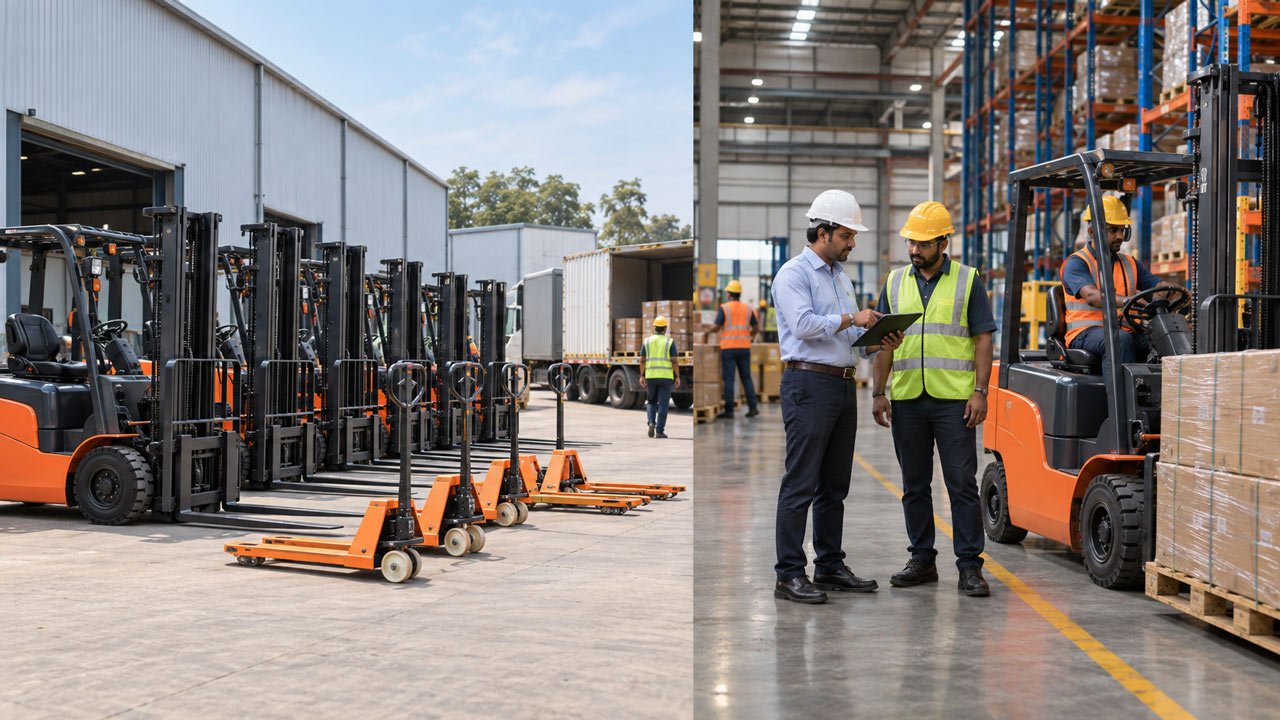
When a business needs material handling or warehouse equipment, one of the first commercial decisions is whether to purchase the equipment or rent it. Both models can make sense. The right choice depends on utilization, project duration, capital availability and operational requirements.
NGT offers rental solutions across material handling equipment, industrial cleaning equipment and maintenance platforms.
When Purchasing Makes Sense
Buying equipment is often suitable when the machine will be used continuously over a long period.
Purchase may be preferable when:
- the equipment is core to daily operations;
- utilization is consistently high;
- the application is stable;
- customization is required;
- the business prefers long-term asset ownership.
Purchased equipment can also be configured specifically around the operation.
When Rental Makes Sense
Rental can be particularly useful where flexibility is more important than ownership.
Typical situations include:
Temporary Demand
Seasonal peaks, new projects or short-term production increases may create a temporary requirement for additional equipment.
Rental allows businesses to increase capacity without making a long-term capital investment.
New Facilities or Operations
During a new warehouse launch, equipment requirements may evolve.
Rental provides flexibility while the business determines its long-term fleet requirements.
Project-Based Requirements
Some equipment may only be required for a defined period.
Maintenance platforms, forklifts or specialized material handling equipment are examples where a rental model may be commercially attractive.
Questions to Ask Before Deciding
Before choosing between purchase and rental, consider:
- How many hours per day will the equipment be used?
- Is the requirement permanent or temporary?
- Is the demand predictable?
- Will the equipment need customization?
- Who will manage maintenance?
- Is capital expenditure a constraint?
- How quickly does the equipment need to be deployed?
A Hybrid Approach Can Also Work
Many warehouses do not need to choose only one model.
A company may purchase its core fleet while renting additional equipment during peak periods or special projects.
This approach can provide a balance between ownership and operational flexibility.
Conclusion
The best decision is based on total operational need rather than the equipment price alone.
Purchase offers long-term control, while rental can offer flexibility and reduce capital commitment.
Need equipment for a temporary or long-term requirement?
Contact NGT to discuss rental availability or purchase options for your application.