
VERTICAL MATERIAL MOVEMENT
Goods Lifts for Moving Material Safely Between Levels.
When materials need to move between floors, mezzanines or different operating levels, the challenge is no longer horizontal movement alone.
Load characteristics, lifting height, access points, available installation space and the way material enters and exits the lift all influence the right vertical-handling approach.
NGT offers goods lifts and vertical material-transfer solutions for different industrial and warehouse applications.
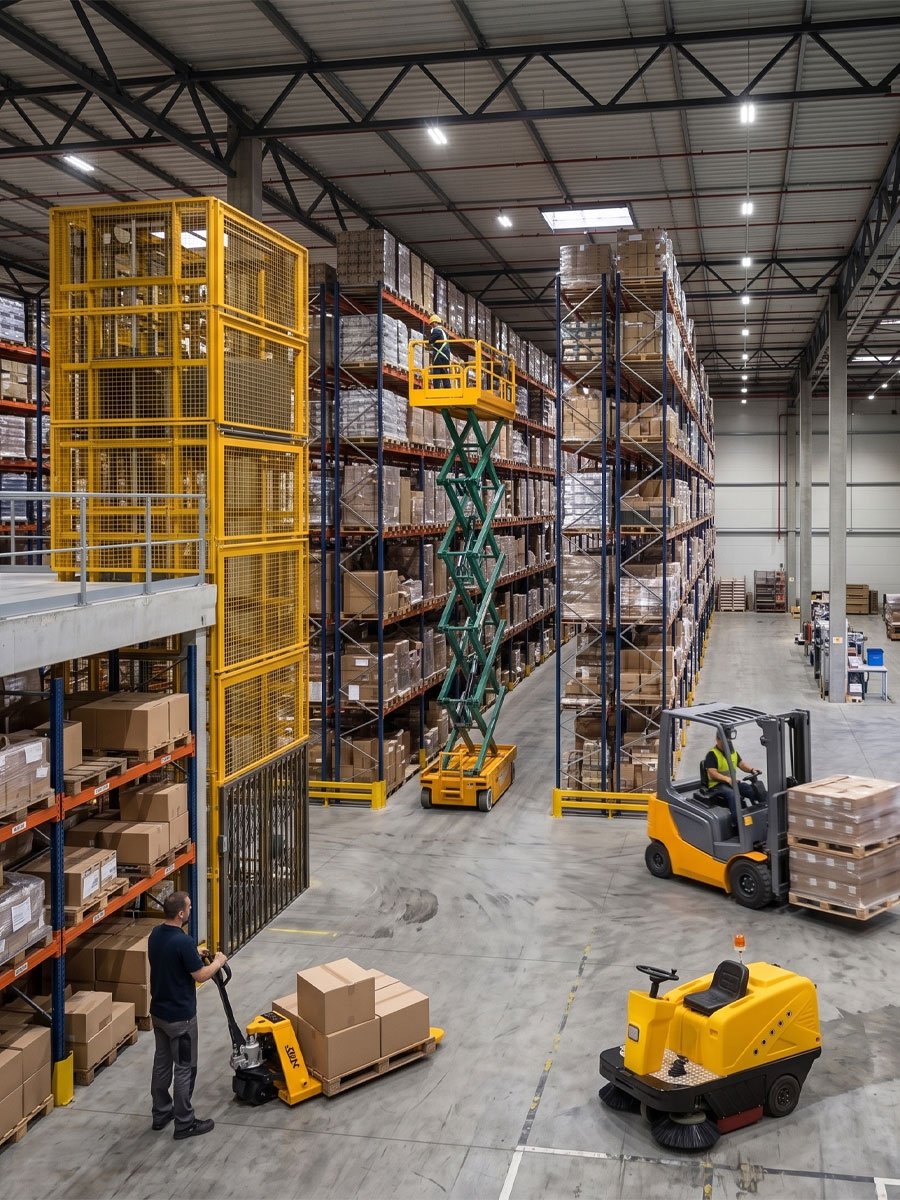
APPLICATION FIRST
Moving Material Between Levels Requires More Than Choosing a Lift.
A goods lift has to work with the complete material-flow process.
The application may involve:
- movement between ground and upper floors
- transfer between warehouse levels
- mezzanine access
- movement between production areas
- loading from one side and unloading from another
- different load dimensions and weights
- integration with surrounding handling equipment
- repeated vertical transfer during operations
The right solution should therefore be evaluated around the load, required movement, building layout and operating process.
Start With the Complete Movement
Review:
- load and dimensions
- start and destination levels
- entry and exit arrangement
- available installation space
- surrounding handling equipment
- operating frequency
EXPLORE THE RANGE
Different Vertical-Handling Solutions for Different Applications.
Explore the existing NGT Goods Lift range below.
Final equipment selection should consider the load, required lifting height, access arrangement, available space and operating requirement.
APPLICATION GUIDE
Start With How the Load Needs to Move Between Levels.
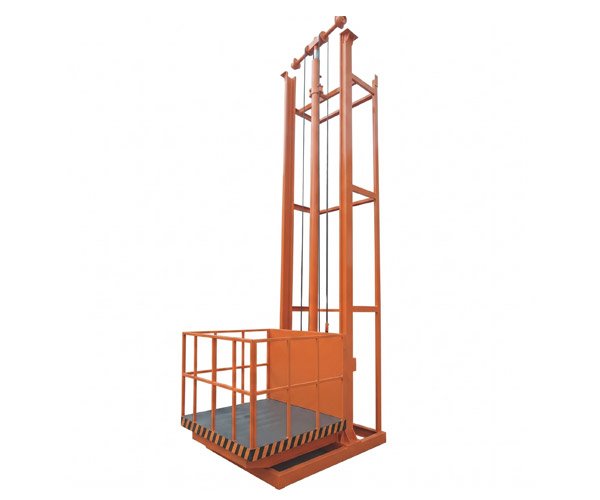
Straightforward Vertical Transfer
For suitable material movement between defined levels where a single-mast arrangement fits the application.
Explore:
Single Mast Hydraulic Goods Lift
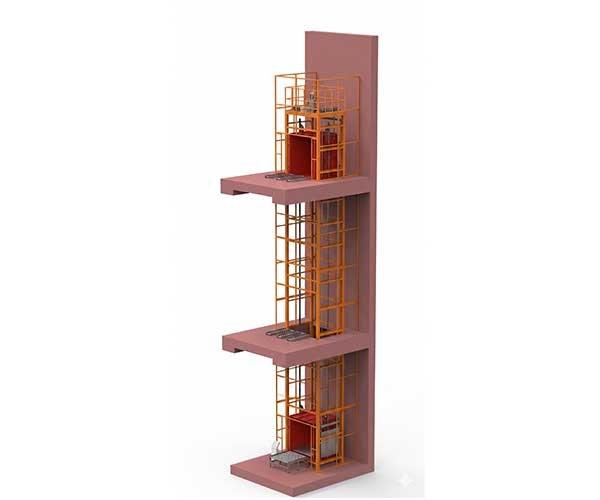
Repeated Inter-Level Material Flow
For suitable operations where vertical transfer forms part of a repeated warehouse or production process.
Explore:
Vertical Reciprocating Conveyor
Different Structural Requirement
Where the load, platform or installation arrangement calls for a dual-mast configuration.
Explore:
Dual Mast Hydraulic Goods Lift
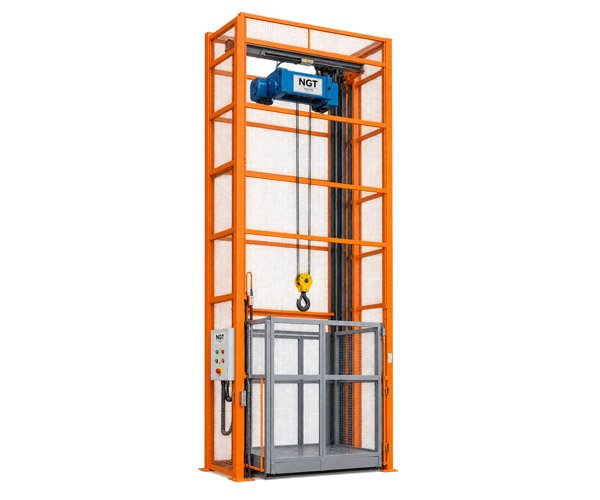
Hoist-Based Lifting
Where a hoist-based goods-lifting configuration is appropriate for the application.
Explore:
Hoist Goods Lift
HOW DOES MATERIAL ENTER & EXIT?
The Entry and Exit Arrangement Can Shape the Lift Design.
Single-Side Access
Material enters and exits from the same side where the application requires it.
Opposite-Side Access
Material can enter from one side and exit from the opposite side where the layout requires through-flow.
Adjacent-Side Access
Material enters and exits through adjoining sides where the building or process layout calls for a different transfer direction.
The final arrangement depends on the facility layout and operating process.
CONFIGURE AROUND THE APPLICATION
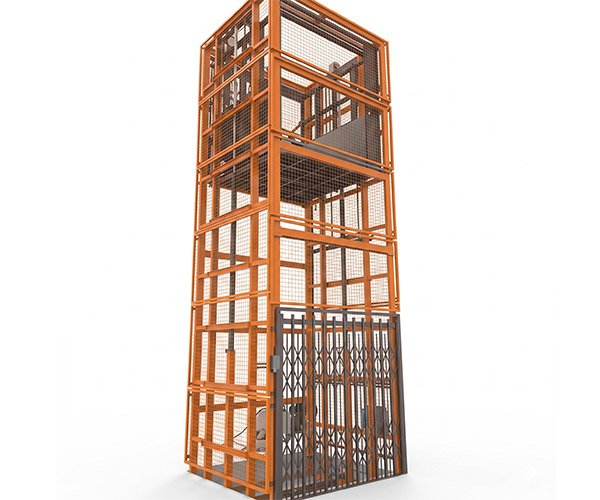
Different Sites Can Require Different Lift Enclosures.
The NGT brochure identifies goods-lift cabin options including:
Open Configuration
For suitable applications where an open lift-platform arrangement is appropriate.
Enclosed Configuration
For applications requiring an enclosed lift-cabin arrangement.
Mesh Cage
For suitable applications where a mesh enclosure forms part of the lift configuration.
Final enclosure and guarding requirements should be determined around the actual installation and applicable engineering requirements.
BEFORE YOU CHOOSE
The Right Goods Lift Starts With the Right Application Information.
01
What Needs to Move?
Understand the load type, dimensions, weight and handling method.
02
Between Which Levels?
Identify the start level, destination level and required vertical movement.
03
How Will Material Enter & Exit?
Consider whether access is required from the same side, opposite sides or adjacent sides.
04
How Will the Load Reach the Lift?
Consider pallet trucks, trolleys, forklifts, conveyors or other handling equipment.
05
How Often Will It Operate?
Operating frequency and material-flow requirements help define the application.
NGT can use these details to identify the vertical-handling solution worth evaluating.
Load → Levels → Access → Handling → Duty
CHOOSING THE APPROACH
The Application Should Determine the Vertical-Transfer Method.
Goods Lift
Evaluate a goods-lift configuration where material needs controlled vertical movement between defined operating levels and the lift arrangement is designed around the load and facility.
Relevant products:
Vertical Reciprocating Conveyor
Evaluate a VRC where vertical material movement needs to function as part of a repeated material-transfer process between levels.
Relevant product:
Final selection depends on the load, installation layout, movement cycle, access requirement and required integration with surrounding processes.
Vertical Material Movement Across Warehouse and Industrial Operations.
Warehousing
Move suitable goods between warehouse floors, mezzanines and storage levels.
Manufacturing
Support vertical movement of materials, components and finished goods between production areas.
Logistics & Distribution
Support appropriate inter-level movement across storage and operational areas.
Retail & Back-of-House
Support suitable goods movement between storage and operating levels.
E-commerce & Fulfilment
Support material transfer between suitable fulfilment and storage levels.
Industrial Facilities
Address vertical movement requirements where different operating levels must be connected.
Site & Application Factors
- floor-to-floor height
- available installation space
- access openings
- loading direction
- platform requirement
- load characteristics
- surrounding building structure
- material-handling equipment
- process flow
- expected operating cycle
Support Across the Vertical-Handling Requirement.
SALES
Evaluate goods-lift and vertical-transfer solutions around the actual application.
SERVICE
Technical support and maintenance for applicable vertical-handling equipment.
SPARES
Spare-parts support for applicable equipment.
NGT — Complete Intralogistics Solutions
Vertical material movement should be evaluated around the load, levels, access arrangement, handling method and complete operating process.